
Coaching & continuing support
What Does a Recovery Coach Actually Help With?
A practical look at goals, everyday routines, accountability, and the questions to ask before beginning coaching.
The Lake · Educational guide
October 27, 2026
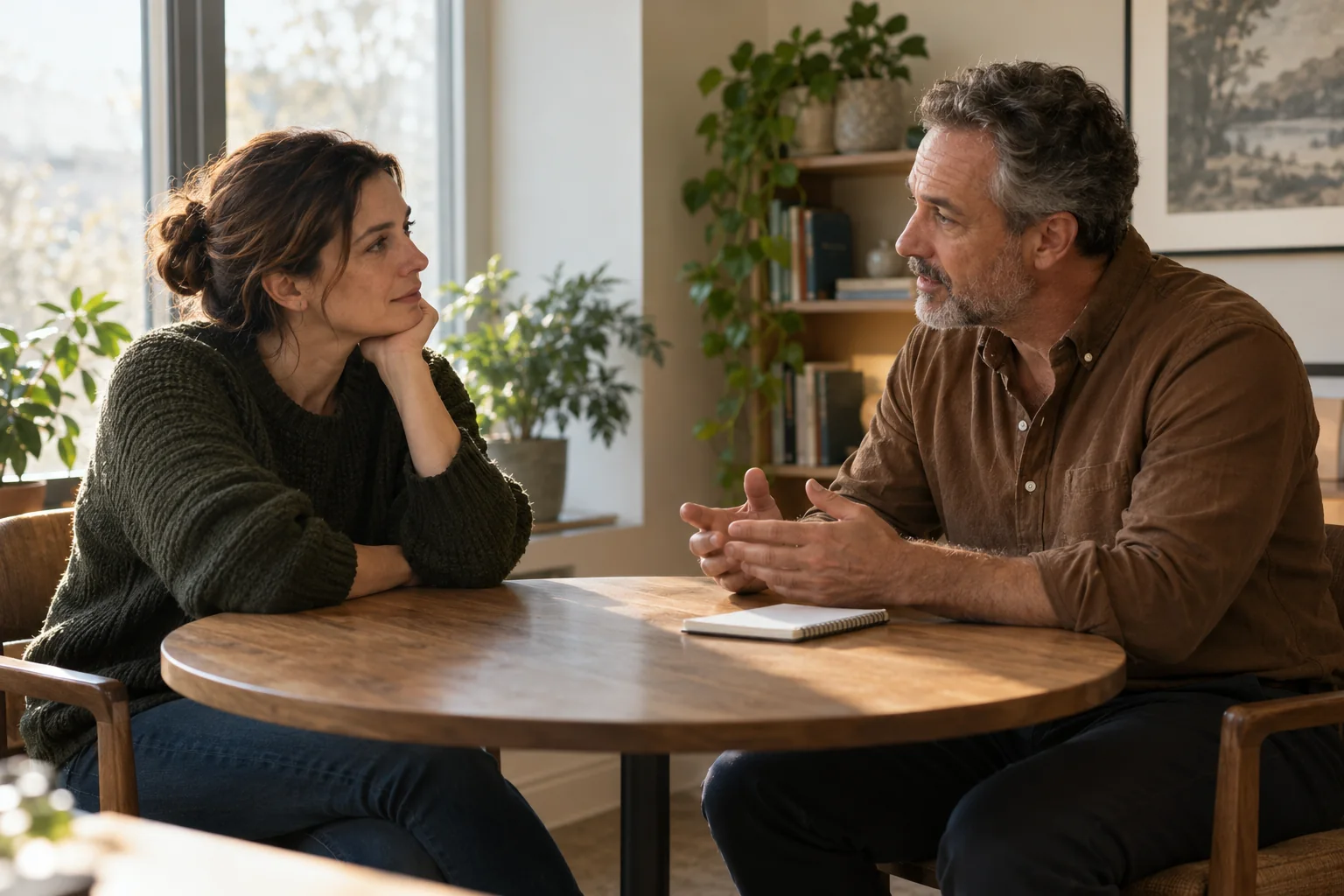
Recovery has an everyday side.
A treatment plan and an ordinary Tuesday are different things. There may be work to return to, a difficult conversation waiting at home, or a stretch of unstructured time that feels harder than expected. Recovery coaching focuses on that everyday side: deciding what matters next and making a workable plan for following through.
The aim is not to create a perfect schedule or hand over responsibility for your life. It is to have a consistent person to think things through with, notice what is getting in the way, and turn an intention into a specific next action.
Start with something concrete.
Before a first conversation, write down one part of life that feels unsettled. Be specific. Instead of ‘I need to get everything together,’ try ‘I keep putting off a conversation about my work schedule’ or ‘My evenings have no structure.’ Those are starting points a coach can help you explore.
You might leave a conversation with a small task, a clearer priority, or an agreement about how you will check in on progress. Ask what accountability will look like in practice. It should be understandable to you, rather than a vague promise of support.
Questions worth asking.
- How do we decide what we will work on together?
- What happens between conversations, and how do we communicate?
- What are the coach’s qualifications, boundaries, and fees?
- How does coaching fit alongside my existing care?
- What happens if I need help that is outside the coach’s role?
Keep the roles clear.
Coaching is not a substitute for medical treatment, psychotherapy, or emergency services. A useful conversation includes an honest explanation of those limits. You should be able to understand who is responsible for which part of your support.
If coaching feels relevant, begin with the question you actually have today. You do not need to arrive with a complete plan. Learn more about recovery coaching at The Lake, or explore how alumni connection differs from individual coaching.